“And Then All at Once”: The Part You Can’t Plan For
The second half of the line is the one I think about most. Slow-burn readers know the feeling. You’ve been patient, you’ve stayed with the characters, and then one scene tips everything over and you realise you’ve been in love with the story for chapters.
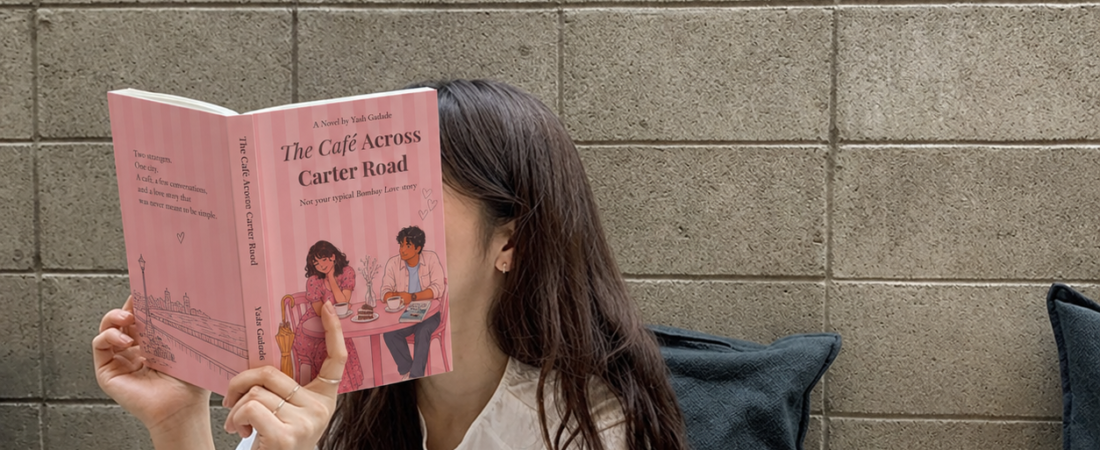
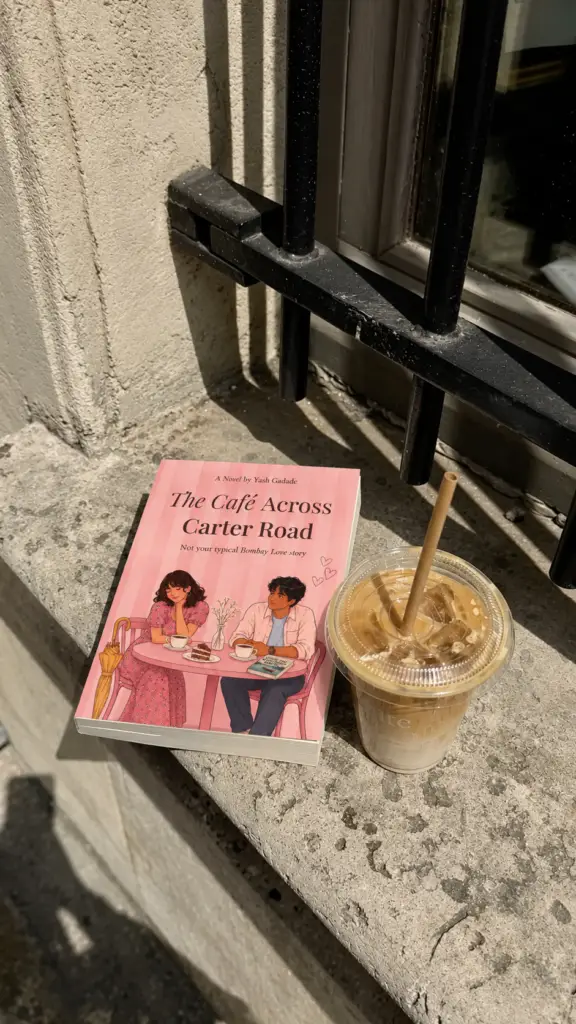
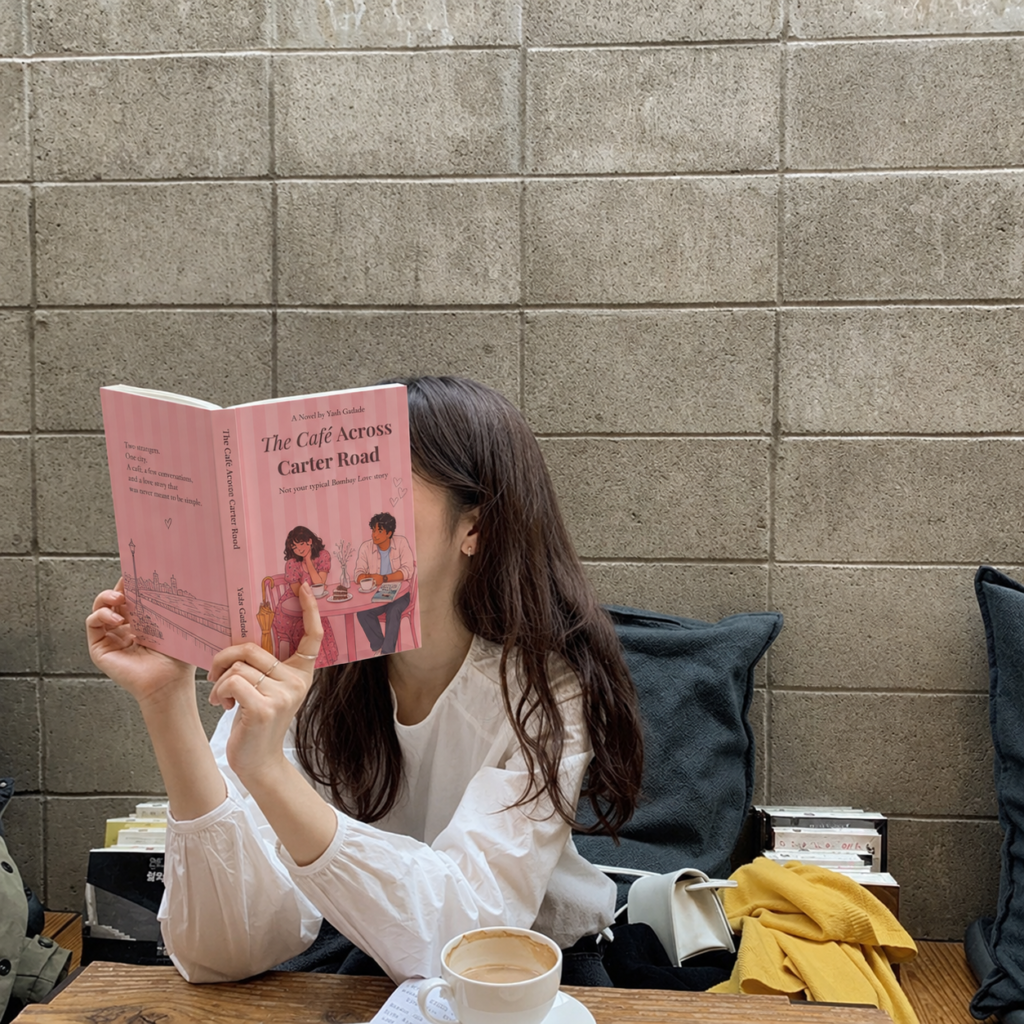
I wanted the book to give readers that tipping point honestly. No fake obstacles or manufactured misunderstandings, just the moment where oh, there it is becomes impossible to ignore. I remember sitting at cafe and getting inspired by an umbrella.
That’s also why the quote says “somewhere around the chapter we didn’t see coming.” Nobody picks the chapter. You can’t flip ahead and find the page where love starts. You only find it afterwards, looking back.
Why Carter Road? Why a Café?
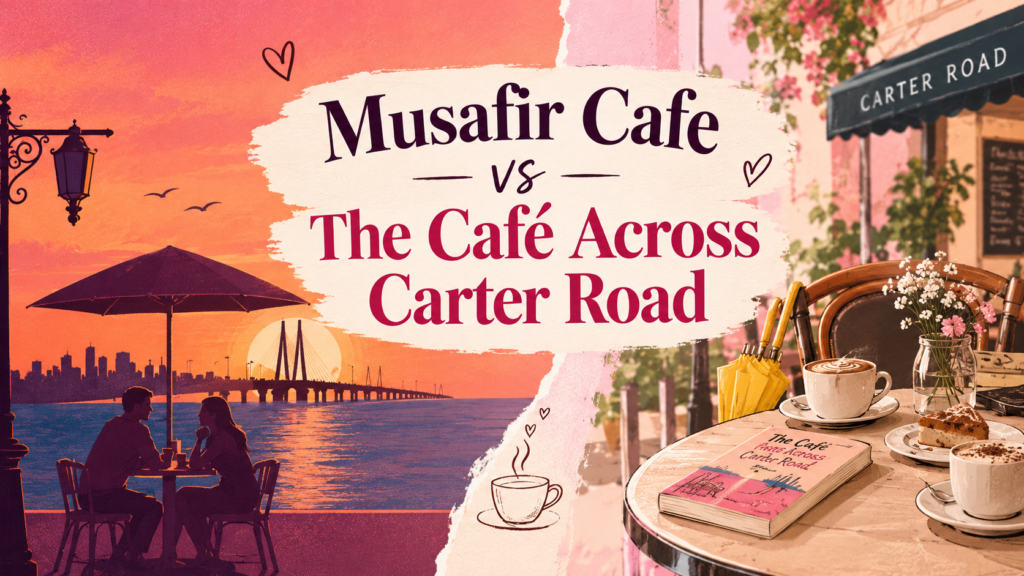
Mumbai has plenty of famous love-story settings. I chose Carter Road because it feels lived in rather than postcard-pretty. It’s a promenade where joggers, couples, dog-walkers, college kids and chai-sipping uncles share the same sea breeze. Everyone’s in the middle of their own story, and nobody notices anyone else’s.
A café across from it seemed like the right place for the book to live. A café is where strangers become regulars and regulars become something else. It’s public but quiet, and you can sit there for hours without anyone asking why you’re still there.
For readers who miss that feeling of Bombay, the monsoon glare off wet pavement, the rush hour that never fully ends, the particular loneliness of a crowded city, I hope the book feels like coming home. For readers who’ve never been, I hope it makes you want to buy a ticket.
The Dual Timeline: Two Stories Reading Each Other
The book runs on a dual timeline, and this is where the title of Part Two, “Between the Pages,” really pays off.
Without giving anything away, the two timelines don’t just run side by side. They comment on each other. A choice a character makes in one thread changes how you read something that happened years earlier in the other. By the end, the question isn’t only “will they end up together?” but “what did we miss the first time?”
Dual timelines are tricky to write, and I’ll admit the editing took longer than I expected. But the structure lets me do something I care about: show that a love story is never only about the present. We carry earlier versions of ourselves into every new relationship, and they’re not always the ones we’d choose to bring.
What Makes This a Romcom, and Not Just a Romance
People ask whether the book is a romance or a romantic comedy. I think of it as a romcom with a heart that does more than joke.
There’s humour throughout. Mumbai is funny, and so are people trying to act casual while quietly falling apart. The characters tease, deflect, overthink their text messages and embarrass themselves in public. If you’ve ever drafted a reply seven times before sending something that said “ok,” you’ll feel seen.
But the comedy sits alongside real feeling, and I think the best romcoms work that way. The laughs make the quiet moments hit harder. A character who can make you laugh in one paragraph can break your heart in the next, because you’ve already come to like them.
What “Not Your Typical Bombay Love Story” Really Means
When I added the subtitle, I wasn’t trying to dismiss other stories. I love the grand, filmy, dramatic kind. I just wanted to write something quieter and more recognisable. For me, “not typical” means:
- No rushed timeline. The relationship earns its pace.
- Real conversations. People talk like people, with half-finished sentences and “wait, I didn’t mean it like that.”
- A city that matters. Mumbai isn’t a backdrop. It shapes the choices the characters make.
- Two timelines, one question. The structure is part of the emotional point.
- An ending that respects you. I won’t spoil it, but I didn’t write it to be convenient.
Who Will Love This Book
If any of these sound like you, I think you’ll enjoy the book:
- You enjoy slow-burn romance and don’t mind waiting for the payoff
- You like dual-timeline stories that reward careful reading
- You’re looking for an Indian romance novel with a modern, urban feel
- You’re a Mumbai reader who wants to see your city treated with affection and honesty
- You love books about books, reading and the way stories shape how we love
- You want an ebook that fits an evening or a long train ride
Is This the Best Romcom by an Indian Author?
I can’t answer that for you. Taste is personal, and I’m obviously biased because I would say ‘Yes’. What I can say is that I wrote it to be a romcom you’d recommend to a friend: funny enough to share, honest enough to remember, and specific enough that it could only be set in Mumbai.
If you read it and agree it belongs on your shelf of favourite Indian romcoms, a review means more to me than any ranking. It also helps other readers find it. And if you disagree, I’d still like to hear why.
Frequently Asked Questions
What is The Café Across Carter Road about?
It’s a slow-burn, dual-timeline romcom set in Mumbai, centred on a café near Carter Road and the relationships that grow around it. It’s published as an ebook.
Who is the author?
Yash Gadade, an Indian author and blogger. You can read more of my writing on [yashgadade.in] and [gadadeyash.blogspot.com], or see my author profile.
Is it a typical Bollywood-style love story?
No. That’s what the subtitle means. It leans toward quiet, realistic emotion rather than big filmy gestures, though it keeps the warmth and humour.
What does “dual timeline” mean?
The story moves between two time periods that influence each other, so earlier events change how you understand later ones.
Where is the quote from?
It opens Part Two, “Between the Pages,” on page 52.