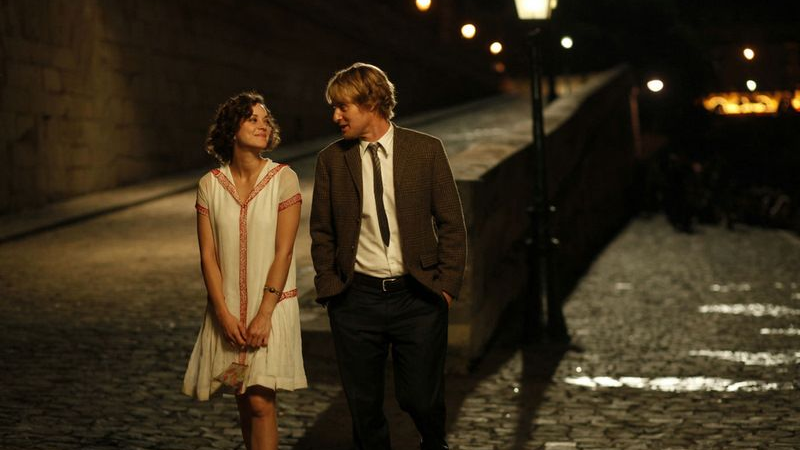
Midnight in Paris looks like a light romantic comedy about a writer who wanders into the past. Underneath, it is a film about one uncomfortable idea: the golden age you long for is never the one you’re living in.
This guide explains the plot, the ending and the “golden age thinking” at the heart of the film. At the end, I’ll share a Mumbai love story that explores the same feeling, my own book The Café Across Carter Road.
In this post:
- What happens in the film
- The ending explained
- What “golden age thinking” means
- Why the film still resonates
- A Bombay love story with the same ache
What Happens in Midnight in Paris? (Quick Plot Summary)
Gil Pender (Owen Wilson) is a Hollywood screenwriter on holiday in Paris with his fiancée Inez (Rachel McAdams) and her parents. He wants to quit scriptwriting and finish his first novel, and he is deeply in love with the idea of Paris in the 1920s.
One night, as the clock strikes midnight, a vintage car pulls up and takes him to the Paris of his dreams. He meets F. Scott and Zelda Fitzgerald, Ernest Hemingway, Gertrude Stein and Salvador Dalí. He also meets Adriana (Marion Cotillard), a woman who captures his heart. Meanwhile, his relationship with Inez falls apart in the present.
Midnight in Paris Ending Explained
Gil and Adriana slip back even further, to the Belle Époque of the 1890s. There, Adriana decides she wants to stay, because she thinks that era is the true golden age. Gil realises that every period feels like a lost paradise to the people who live in a later one. Adriana’s dream is the 1890s, just as his is the 1920s.
That is the turning point. Gil sees that:
- Nostalgia is a form of denial. It lets us avoid problems in the present.
- If he escapes into the past forever, he never fixes his own life.
- The “golden age” is a story we tell ourselves.
He returns to the present, ends his engagement and decides to stay in Paris. In the final scene he walks through the rain, a Paris he used to see as just a backdrop to a better one, beside a woman he met in the present. The point is simple: the present was always where his life was waiting.
What Is “Golden Age Thinking”?
Golden age thinking is the belief that a previous era was better than the one you live in. In the film, the 1920s artists love their own era but dream of the Renaissance, and Adriana’s longing for the 1890s completes the pattern.
Takeaways from the film:
- Every generation feels it. Nostalgia is nearly universal.
- Nostalgia edits memory. We remember the glow and forget the discomfort.
- The cure isn’t to stop loving the past. It is to stop using it to avoid your own life.
Why Midnight in Paris Still Resonates
Beyond the story, a few things keep viewers coming back:
- Paris as a character. The opening montage and the rainy-night finale make the city feel alive.
- Gentle humour. Even its meditation on regret feels warm.
- A romantic idea that costs nothing. It’s about wanting to belong somewhere, and that doesn’t need a time machine.
It’s also why so many people go looking for more stories like it. If you’ve done that already, I’ve put together Carter Road, Bandra: The Real Places Behind The Café Across Carter Road, including time-slip romances, café fiction and 1920s Paris.
The Same Ache, a Different City: A Mumbai Love Story
Here is where I’ll bring in my own work. The feeling Midnight in Paris captures isn’t Parisian. It’s universal, and I see it every time I walk through Bandra in the rain.
Mumbai is a city of layers. Old cafés sit beside glass towers, and a sea-facing street can feel like it belongs to three decades at once. That is what I wanted to write about.
Both Midnight in Paris and The Café Across Carter Road are built on the same quiet question: are we in love with a person, a place, or the time we wish we were living in? Each story lets its characters move between two eras, Gil between the present and the 1920s, and the book between past and present Bombay, so the past is never just a memory but something that shapes the choices they make today. In both, the city is a character in its own right, whether it’s Paris glowing in the rain or Carter Road with its sea breeze, café window seats and monsoon light. And both are slow-burn romances that reward patience, with feelings that grow through small moments rather than grand gestures. The difference is the setting: where the film gives us Paris, this Mumbai love story gives the same nostalgic ache a Bombay address, making it a natural next read for anyone who finished the film wishing for more.
Get Your Copy!
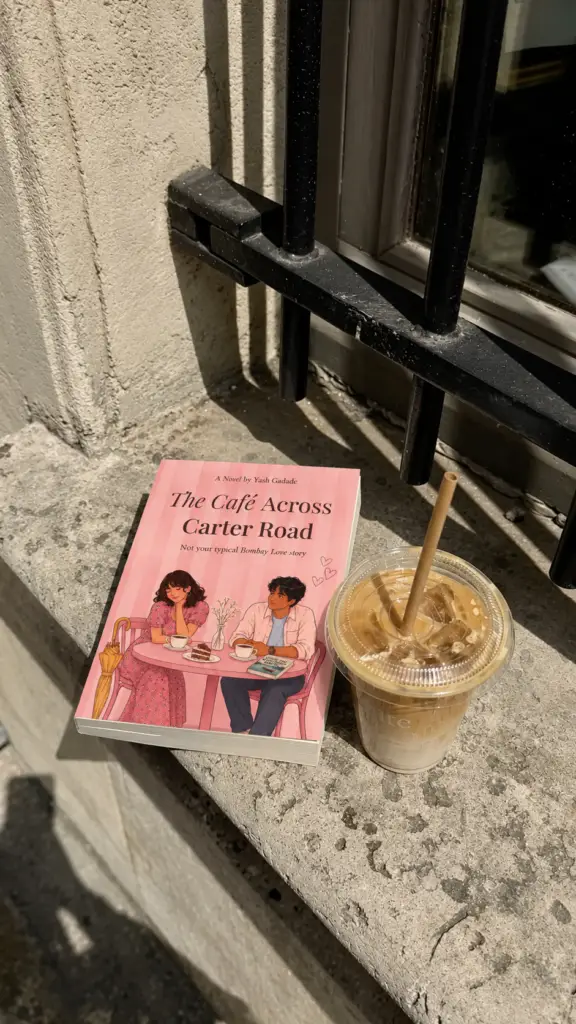
Some love stories aren’t spoken out loud. They’re left in the margins, waiting to be found. Adi first notices her from across Carter Road, on Mumbai’s Bandra promenade, a stranger under a yellow umbrella, watching the sea while he stares at a blank manuscript.
FAQ
What is the message of Midnight in Paris?
The film argues that nostalgia can trap us. Longing for a “golden age” keeps us from living fully in the present.
What is the ending of Midnight in Paris?
Gil leaves his fiancée, chooses to stay in modern-day Paris and walks in the rain with a new love interest, having let go of his obsession with the 1920s.
What does “golden age thinking” mean?
It means believing a past era was better than your own, even though people in that era felt the same about an earlier one.
Why does Adriana stay in the past?
She believes the Belle Époque is the true golden age, which shows Gil that the pattern never ends.
Is there an Indian love story like Midnight in Paris?
The Café Across Carter Road is a Mumbai dual-timeline romance with a similar nostalgic, city-as-character feel.